If you’ve ever driven through a rural stretch, crossed a highway, or stood near a city’s power grid, you’ve likely glanced at an angle steel tower—those lattice frameworks strung with power lines, supporting telecom antennas, or holding up transmission lines that keep our homes and businesses running. For years, my team and I have supplied these towers to projects across North America, and one question comes up in every early-stage conversation with engineers, contractors, and project managers: What seismic design codes apply to angle steel towers? Angle Steel Tower
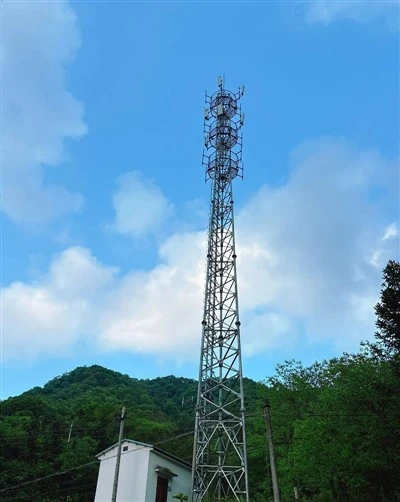
It’s not a trivial question. Angle steel towers rely on their geometric precision and material strength to stay standing through wind, ice, and, most critically, seismic activity. The wrong code application, or a miscalculation in how those codes translate to a finished tower, can lead to costly delays, safety risks, or even tower failures. As someone who’s spent 12 years sourcing and supplying angle steel for these structures, I’ve seen firsthand how following the right seismic design standards isn’t just about compliance—it’s about building infrastructure that lasts.
Let’s break this down, starting with the most widely referenced codes, how they apply specifically to angle steel towers, the common pitfalls I help clients avoid, and what that means when you’re working with a supplier like my team.
First, the backbone of seismic design for most of the world is the International Building Code (IBC), adopted and adapted by most U.S. states and territories. For telecom and transmission towers, the IBC doesn’t use a separate section for angle steel lattice towers explicitly, but it references two key standards from the American Society of Civil Engineers (ASCE): ASCE 7, Minimum Design Loads and Associated Criteria for Buildings and Other Structures, and ASCE 37, Standard for the Seismic Design of Transmission and Distribution Structures. These two documents are the foundation for almost every angle steel tower project I work on, regardless of whether it’s a small 30-foot telecom tower or a 200-foot transmission tower crossing a fault line.
Wait, why ASCE 37 specifically? Because ASCE 7 is broad—it covers everything from office buildings to bridges—but ASCE 37 is tailored to the unique needs of linear structures like power lines and their supporting towers. Unlike a solid building, an angle steel tower is a lightweight, flexible lattice structure, so its seismic response depends on how its individual angle steel members bolt together, how the lattice frame distributes force, and how the foundation anchors it to the ground. ASCE 37 codifies all that. For example, it outlines seismic zone classifications, which is non-negotiable. If your project is in California, where the USGS (United States Geological Survey) maps show a Seismic Design Category (SDC) D, E, or F, your angle steel tower has to be engineered to resist much higher lateral forces than a tower in the Midwest, where SDC might be B or C.
Let’s get specific about what the codes demand from angle steel towers. First, material selection. Most angle steel for towers is A36 carbon steel, but ASCE 37 and AISC (American Institute of Steel Construction) standards also allow A572 Grade 50 for taller towers. The code doesn’t just say “use steel”—it specifies minimum yield strength, because when an earthquake hits, the tower’s members have to bend slightly to absorb seismic energy, but not fracture. I always push clients to confirm that their supplier is providing certified steel that meets ASTM A36 or A572 specs; generic angle steel from a hardware store won’t cut it for seismic projects. We keep our steel sourced from mills that provide mill test reports (MTRs) for every shipment, which is non-negotiable for code compliance.
Next, joint design is make-or-break for angle steel towers. The lattice frame is held together by bolts, gusset plates, and welds. ASCE 37 requires that bolted joints for seismic zones have a minimum of two bolts per critical connection, and that bolts be high-strength, conforming to ASTM A325 or A490. I’ve seen projects cut corners here: using single bolts to save cost, or regular hex bolts instead of high-strength ones. When an earthquake hits, that single bolt can shear, and the entire frame can collapse. For welds, the code specifies that fillet welds on angle steel members have a minimum size, and that all welds undergo visual inspection (and often non-destructive testing) to ensure no cracks or incomplete penetration. We work with third-party inspectors on every tower order for seismic projects to verify weld and bolt specs—my team knows that skimping here is a risk no one wants to take.
Then there’s lateral load calculation. Seismic force isn’t like wind force, which pushes steadily from one direction. Earthquakes produce dynamic, oscillating force that moves in multiple directions. ASCE 7 uses a response modification factor (R-factor) for different structure types, and for lattice steel towers, that R-factor is typically around 3.5. What does that mean? It tells engineers how much the tower can flex without collapsing. For angle steel towers, which have a rigid lattice design, the R-factor is lower than for lighter structures like wood poles, which means seismic forces have to be calculated more conservatively. I often work with engineers to help them understand how our pre-engineered angle steel components (we cut and drill angle steel to custom lengths for towers) fit into these R-factor calculations, making sure the tower’s natural frequency doesn’t match the frequency of local seismic events— a common cause of resonance, which can tear a tower apart.
Beyond the U.S., if you’re working on projects in Canada, the seismic design codes shift to the National Building Code of Canada (NBCC), which references the Canadian Standards Association (CSA) Standard CAN/CSA-S6, Limit States Design for Steel Structures, and CSA-C22.3, Electrical Safety Standards for Power Systems. CSA-S6 has specific provisions for lattice steel towers in seismic zones, similar to ASCE 37, but it has slightly different requirements for foundation anchorage and member sizing. For example, in British Columbia, which sits on the Pacific Ring of Fire, CSA-C22.3 requires that transmission towers have a ductile design, meaning the angle steel members can deform without breaking under seismic load. My team is familiar with both U.S. and Canadian code requirements, and we’ve supplied towers for projects in Alberta and British Columbia that meet CSA standards, so clients don’t have to worry about switching suppliers mid-project.
One thing I wish more people understood is that seismic codes for angle steel towers aren’t one-size-fits-all. A small telecom tower in Ohio might only need to meet IBC and ASCE 7/37, but a transmission tower in the San Andreas Fault zone has to go through a more rigorous process: seismic hazard analysis to determine the expected ground acceleration, soil testing to see how the foundation will perform during an earthquake, and even shake table testing for taller towers. I recently worked on a 180-foot transmission tower project in Southern California where the engineer specified a special bracing pattern for the angle steel members to resist higher lateral forces—something that would have been overkill for a tower in Florida, where seismic risk is extremely low.
Common mistakes I see project teams make when specifying angle steel towers for seismic zones: First, using generic steel that doesn’t have the required yield strength. It’s tempting to go with a cheaper steel grade, but that can lead to the tower failing at a seismic force lower than the code’s minimum. Second, ignoring joint design. Even if your angle steel members are strong, a bad bolted joint or weak weld will cause the tower to fall apart during an earthquake. Third, not accounting for secondary loads. Seismic forces don’t act on the tower alone—they also act on the power lines or antennas attached to it, which add extra lateral force. The codes require that these secondary loads be factored into the tower’s design, and my team works closely with electrical engineers to make sure our angle steel components accommodate that extra load.
So, what does this mean for you, if you’re in the market for an angle steel tower that meets seismic design codes? First, make sure your supplier knows the specific code requirements for your location. Not all tower suppliers specialize in seismic projects—some only build for wind-prone areas or low-seismic zones. Second, ask for documentation: mill test reports, weld inspection records, and compliance statements that confirm the tower meets ASCE, CSA, or whatever code applies to your project. Third, communicate early: if your project is in a high-seismic zone, tell your supplier upfront. We adjust our manufacturing process, source the right steel, and even work with third-party inspectors to make sure every part of the tower is code-compliant. I always tell clients: the cheapest quote isn’t the best quote if it means the tower doesn’t meet seismic standards.
At the end of the day, angle steel towers are critical infrastructure. They power our homes, connect us to the internet, and keep essential services running. Following the right seismic design codes isn’t just about checking a box—it’s about making sure that when the earth shakes, the tower stays standing. For over a decade, my team has supplied angle steel towers that meet global seismic design standards, working with engineers and contractors to deliver structures that are safe, durable, and code-compliant. If you’re planning a project that requires an angle steel tower, especially in a seismic zone, reach out to us to discuss your needs, review code requirements, and get a quote tailored to your project.
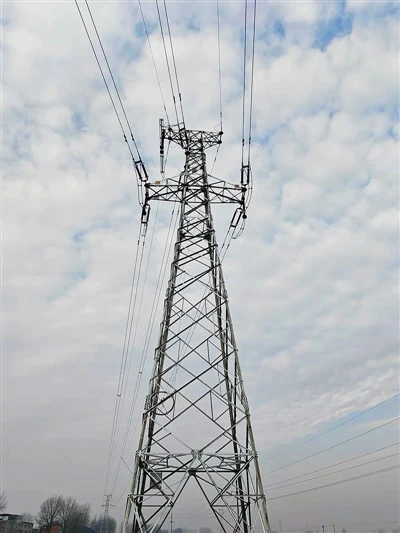
When it comes to seismic design codes for angle steel towers, knowledge is power, and partnering with a supplier who understands those codes is the first step to a successful project. Don’t leave infrastructure safety to chance—make sure your tower meets the right standards, and work with a team that has the expertise to deliver.
Monopole Transmission Tower References
Minimum Design Loads and Associated Criteria for Buildings and Other Structures, ASCE 7-22, American Society of Civil Engineers
Standard for the Seismic Design of Transmission and Distribution Structures, ASCE 37-21, American Society of Civil Engineers
National Building Code of Canada, 2020 Edition, National Research Council Canada
Limit States Design for Steel Structures, CAN/CSA-S6-19, Canadian Standards Association
Standard for Steel Transmission Poles and Towers, ASTM A123/A123M-18, American Society for Testing and Materials
Hunan Zhubang Hongsheng Construction Technology Co., Ltd.
As one of the most professional angle steel tower manufacturers and suppliers in China, we’re featured by quality products and good price. Welcome to buy high-grade angle steel tower made in China here and get quotation from our factory. Customized orders are welcome.
Address: Lutang Village, Yong’an Town, Liuyang City, Changsha City, Hunan Province, Hunan Zhubang Hongsheng Construction Technology Co., Ltd.
E-mail: 19898838989@163.com
WebSite: https://www.chinaenerto.com/
