Hey there! As a supplier of distribution cabinets, I’ve been in the thick of things when it comes to selecting the right busbar. It’s a crucial part of the whole process, and getting it wrong can lead to all sorts of headaches. So, I thought I’d share some tips on how to pick the perfect busbar for your distribution cabinet. Distribution Cabinet

First off, let’s talk about what a busbar actually is. In simple terms, a busbar is a conductor that distributes electrical power within a distribution cabinet. It’s like the main highway for electricity, carrying current from the source to different circuits in the cabinet.
One of the first things you need to consider when selecting a busbar is the current-carrying capacity. This is basically how much electrical current the busbar can handle without overheating. You don’t want to end up with a busbar that can’t keep up with the power demands of your distribution cabinet.
To figure out the current-carrying capacity you need, you’ll have to look at the total load of the circuits in your cabinet. Calculate the sum of the currents of all the connected devices and circuits. This gives you a rough idea of the minimum current-carrying capacity your busbar should have. It’s always a good idea to add a bit of a safety margin, say around 20 – 30%, just to be on the safe side. For example, if your total calculated load is 100 amps, you might want to go for a busbar with a current-carrying capacity of 120 – 130 amps.
Material is another super important factor. The most common materials for busbars are copper and aluminum.
Copper is a top – notch choice. It has excellent electrical conductivity, which means it can carry a large amount of current with relatively low resistance. Low resistance is great because it reduces power losses in the form of heat. Copper is also very durable and resistant to corrosion, which is a big deal when you want your busbar to last a long time. However, copper is more expensive than aluminum.
Aluminum, on the other hand, is lighter and less costly. It still has decent electrical conductivity but not as good as copper. Aluminum busbars may require a larger cross – sectional area to carry the same amount of current as a copper busbar. They are also more prone to corrosion, especially in certain environments. But if you’re on a tight budget and the application doesn’t demand the highest conductivity, aluminum can be a viable option.
The cross – sectional area of the busbar is directly related to its current – carrying capacity. A larger cross – sectional area can carry more current. But you can’t just go for the biggest cross – sectional area possible because you also have to consider the physical space available in your distribution cabinet.
You need to measure the available space carefully and make sure the busbar you choose will fit. Sometimes, you might have to compromise a bit on the cross – sectional area if space is limited, but just be sure to double – check that it still meets your current – carrying requirements.
Next up is the insulation. Insulated busbars are a good option as they provide an extra layer of safety. They prevent accidental contact with live parts, which is crucial in a distribution cabinet to protect both the equipment and the people working around it.
There are different types of insulation materials available, like PVC, epoxy, and mica. PVC is a common and cost – effective choice. It’s easy to work with and provides decent insulation. Epoxy insulation is more suitable for high – voltage applications as it has better dielectric strength. Mica is often used in high – temperature environments due to its excellent thermal stability.
The shape of the busbar can also matter. The most common shapes are flat and rectangular. Flat busbars are easy to install and are often used in low – voltage applications. Rectangular busbars offer more surface area, which can help with heat dissipation. In some cases, you might also come across circular or tubular busbars, which are used in specific applications where a particular shape is required for mechanical or electrical reasons.
Another aspect to think about is the environment in which the distribution cabinet will be placed. If it’s in a high – humidity area, you’ll need a busbar that is more resistant to corrosion. For example, if you coat a copper busbar with a protective layer, it can withstand the moisture better.
In a dusty or dirty environment, it’s important to choose a busbar that won’t easily accumulate dust, or one that can be easily cleaned. In industrial settings where there might be vibrations, the busbar should be securely mounted to prevent loosening and electrical arcing.
When it comes to connections, proper connection of the busbar within the distribution cabinet is essential. You need to ensure that the connections are tight and have low resistance. Loose connections can cause overheating and increase the risk of electrical failures.
There are different methods of making connections, such as bolted connections, welded connections, and soldered connections. Bolted connections are the most common as they are easy to install and allow for easy maintenance and replacement. Welded connections provide a very strong and low – resistance joint but are more difficult to modify. Soldered connections are used in some low – current applications where a more permanent and reliable connection is needed.
Now, let’s talk about standards and certifications. It’s really important to choose a busbar that meets relevant industry standards. Standards ensure that the busbar has been tested and meets certain quality and safety requirements.
Look for busbars that are certified by organizations like UL (Underwriters Laboratories) or IEC (International Electrotechnical Commission). These certifications give you peace of mind that the busbar is safe to use and will perform as expected.
If you’re still not sure after going through all these factors, it’s always a good idea to consult with an expert. We suppliers have a lot of experience in this area, and we can help you make the right choice based on your specific needs.
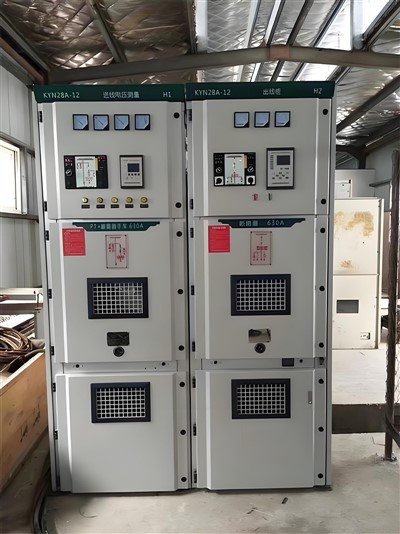
As a distribution cabinet supplier, I’ve seen firsthand how the right busbar can make a huge difference in the performance and reliability of a distribution cabinet. If you’re in the market for a distribution cabinet and need help with busbar selection, or if you just have some questions, don’t hesitate to reach out. We’re here to assist you in finding the best solution for your electrical distribution needs.
Tertiary Distribution Box References:
- Electrical Installation Handbook by Schneider Electric
- Handbook of Electrical Engineering by McGraw – Hill
Anhui Nanxian Electric Co., Ltd.
With abundant experience, we are one of the most professional distribution cabinet manufacturers and suppliers in China. We warmly welcome you to buy advanced distribution cabinet for sale here and get quotation from our factory. All customized products are with high quality and low price.
Address: Factory Unit 03-2, Building 21, Feidong Yinfeng Industrial Park Co., Ltd., Northeast Corner of Manquan Road and Changle Road, Hefei Circular Economy Demonstration Park, Feidong County, Hefei City, Anhui Province.
E-mail: 541580567@qq.com
WebSite: https://www.nxelepower.com/
