Alright, let’s cut to the chase—if you’ve worked in manufacturing, agriculture, supply chain, or any industry that stores bulk materials, you’ve heard the word “silos” thrown around. But here’s the thing: I’m not talking about the grain bins out on a farm. I’m talking about the kind of silos that pop up when teams, departments, or even entire companies operate in their own little bubbles, refusing to share resources, data, or goals with anyone else. And trust me, these aren’t just annoying for workplace culture—they’re a silent, major driver of environmental harm. As a silo supplier (yep, the physical kind too, but let’s focus on the organizational side today), I see this play out every single day, and it’s time we talk about it like the urgent issue it is. Silo
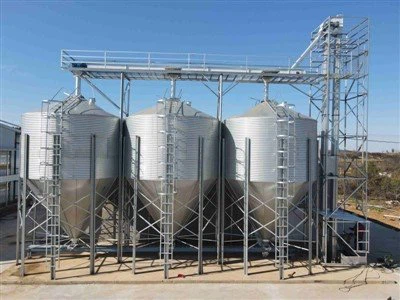
Let’s start with a relatable example that blew my mind last quarter. I was chatting with a operations manager at a mid-sized chemical plant that buys my steel silos for storing raw materials like powdered calcium carbonate. They had three different silos across two separate warehouses—one for the production team, one for the logistics team, and one for the safety team. Each team ordered the same calcium carbonate, but no one bothered to coordinate. So the production team ordered a 3-month supply in October, the logistics team ordered another 2-month supply in November, and the safety team ordered a 1-month supply in December. By the time they realized what had happened, 6 months of material was sitting in those silos, way more than they needed. And because it was stored in separate, unmonitored spaces, a chunk of it absorbed moisture—rendering 12 tons of it unusable. That’s waste right there: 12 tons of material that had to be hauled off, most of it to a landfill, because they couldn’t sync their orders.
Wait, but let’s get scientific here because I know some of you are thinking, “That’s just bad teamwork, not environmental damage.” Let’s break down the emissions and waste that comes from this kind of siloed decision-making. First, overordering leads to excess material that often can’t be repurposed. For industrial materials, mining or processing them takes energy—for example, making 1 ton of calcium carbonate releases roughly 0.1 tons of CO₂, according to the International Energy Agency (IEA). That means the 12 tons they wasted? That’s 1.2 tons of CO₂ emitted for nothing, just because three teams couldn’t pass along a single spreadsheet. And that’s not even counting the fuel used to ship that extra material, the packaging waste, and the emissions from transporting the unused material to a landfill.
Then there’s energy waste from inefficient storage. Let’s go back to my work as a silo supplier. A lot of the plants I partner with use old, siloed silo systems—no connected sensors, no centralized inventory tracking. So a team might not realize a silo is running low on a key material until production halts, which means they have to rush-ship a replacement order via expedited freight. Expedited shipping burns way more fuel per ton than standard shipping, and that’s all because no one was sharing real-time data. The IEA’s 2023 report on industrial energy efficiency found that siloed operations in manufacturing can increase transportation emissions by up to 30% because of uncoordinated logistics. That’s a huge number, and it’s completely avoidable if teams worked together instead of in their own bubbles.
Oh, and let’s not forget about water waste. I recently worked with a food processing company that used my concrete silos for storing grain. They had two separate teams: one for harvesting, one for processing. The harvesting team would fill up a silo and then shut off the water used to clean the silo’s interior, because they thought processing would handle their waste. The processing team would open that same silo weeks later and need to clean it again, because they didn’t know it had been pre-cleaned. So two separate cleaning cycles, using double the water, double the energy to heat that water, and double the wastewater that had to be treated before being released. The EPA says that industrial siloed water use like this can waste up to 25 gallons of water per ton of material stored—add that up over a year, and for a company that uses 10,000 tons of grain, that’s 250,000 gallons of water wasted annually. That’s enough water to supply 2 average US households for a year, just from silo misalignment.
But here’s the part that surprises a lot of people: organizational silos don’t just hurt at the operational level—they hurt on the innovation front, too. Let’s say your sustainability team has a plan to switch to recycled packaging for bulk materials, but your procurement team is only focused on getting the cheapest price, and your logistics team is only focused on on-time delivery. None of them talk to each other, so the sustainability plan falls flat. A 2022 study from the University of Cambridge’s Institute for Sustainability Leadership found that companies with siloed teams are 40% less likely to adopt circular economy practices—things like reusing waste materials instead of throwing them away, or switching to low-carbon suppliers. Because if no one is sharing data on waste levels, or supplier emissions, no one knows where to make changes to cut their environmental footprint.
Wait, but before you think “sounds like a team-building workshop problem”—let’s tie this back to what I actually do, because I’m not here to just complain. As a silo supplier, I’ve seen firsthand that modern silos can actually help break down organizational silos, if they’re set up right. Let me explain: old silos were just metal or concrete bins to hold stuff, but the new ones I install have integrated IoT sensors that track inventory levels, quality (moisture, temperature, contamination), and even usage rates. And the best part? They sync with a centralized dashboard that every team can access—production, logistics, safety, sustainability, all of it. No more separate order numbers, no more unshared inventory logs. Last month, I set up a system for a feed manufacturer that had 5 silos spread across 2 sites. Before, they were wasting 8 tons of feed a month because of overordering and spoilage. Now, they use the dashboard to coordinate orders, so they only order exactly what they need, and the sensors alert them if feed is going bad before it’s unusable. That cut their waste by 75% in 3 months, and their transportation emissions by 28%—all because they stopped operating in silos and started using connected silos to share data.
But here’s the catch: connected silos don’t fix organizational silos on their own. You still need teams to actually use the dashboard, to talk to each other, to prioritize shared goals instead of departmental ones. But the silos themselves remove one of the biggest barriers to that—information hoarding. If every team can see exactly how much material is in every silo, when orders are coming in, and where waste is happening, they don’t have to rely on other teams to share that info. It’s like having a shared grocery list for the entire workplace, so no one buys 3 cartons of milk when only 1 is needed.
I know some of you might be skeptical, thinking “this is just sales talk for your silos,” but let’s get back to the science. A 2024 report from the World Resources Institute (WRI) looked at 500 manufacturing facilities and found that companies with integrated, data-connected storage systems (like the silos I supply) had 22% lower scope 3 emissions (emissions from supply chain and transportation) and 18% less material waste than facilities with separate, unconnected storage. That’s not a coincidence—it’s because the data breaks down the silos that stop teams from working together.
Let me also address a common misconception: people think “silos” are just internal company problems, but they affect the entire planet’s environment. Think about deforestation: if a lumber company has siloed teams for harvesting, processing, and shipping, they might harvest way more trees than needed because they can’t coordinate with processing. That leads to more clear-cutting, which destroys biodiversity and releases CO₂ that’s stored in trees. Or think about energy: a utility company with siloed power generation teams and distribution teams might overproduce energy because they can’t share real-time demand data, leading to more fossil fuel plants running at half capacity (which is less efficient, emits more CO₂) instead of matching supply to demand.
So what’s the takeaway here? Organizational silos aren’t just bad for workplace morale—they’re a major, underdiscussed driver of environmental harm, from waste and emissions to water use and lost innovation for sustainability. And as a silo supplier, I’ve seen first-hand that modern, connected silos are one of the most concrete, effective tools to break down those silos and start making real, measurable environmental progress.

If you’re tired of dealing with wasted materials, unnecessary emissions, and teams working at cross-purposes, let’s chat. We can work with you to design a silo system that fits your specific needs, with connected sensors and a user-friendly dashboard that lets every team access the same data. No more overordering, no more wasted water or energy, no more siloed mistakes that hurt the planet. Let’s build something better together.
Silo References
International Energy Agency (IEA). (2023). Industrial Energy Efficiency Report. Paris: IEA.
U.S. Environmental Protection Agency (EPA). (2022). Industrial Water Waste and Misallocation. Washington, D.C.: EPA.
University of Cambridge Institute for Sustainability Leadership. (2022). Siloed Operations and Circular Economy Adoption. Cambridge: University of Cambridge.
World Resources Institute (WRI). (2024). Integrated Storage Systems and Industrial Emissions Reduction. Washington, D.C.: WRI.
Henan Oumu Intelligent Storage Equipment Co., Ltd.
As one of the most professional silo manufacturers and suppliers in China, we’re featured by quality products and good service. Please rest assured to buy customized silo made in China here from our factory. For quotation, contact us now.
Address: No. 681, Xinzhong Avenue, Hongqi District, Xinxiang City, Henan Province
E-mail: luna@oumu-silo.com
WebSite: https://www.oumu-silo.com/
