Hey there, folks! I’m a supplier of 3D printing wax materials, and today I wanna chat about the abrasion resistance properties of 3D printed wax objects. It’s a topic that’s super important, especially for those of us in the 3D printing game. 3D Printing Wax Material
First off, let’s talk about what abrasion resistance actually means. In simple terms, it’s how well an object can withstand wear and tear from rubbing, scraping, or friction. For 3D printed wax objects, this property can make a huge difference in their usability and longevity.
So, what affects the abrasion resistance of 3D printed wax objects? Well, there are a few key factors. One of the biggest is the type of wax material used. Different waxes have different chemical compositions, and these can have a big impact on how resistant they are to abrasion. For example, some waxes are formulated to be more durable and less likely to wear down quickly. As a supplier, I’ve seen a wide range of wax materials on the market, each with its own unique set of properties.
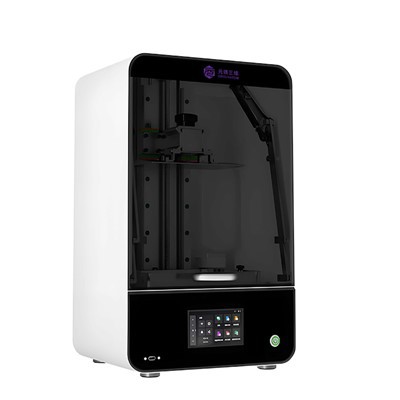
Another factor is the printing process itself. The way the wax is laid down layer by layer during 3D printing can affect the object’s overall structure and, in turn, its abrasion resistance. If the layers are not properly fused, the object may be more prone to chipping or flaking when it comes into contact with other surfaces. That’s why it’s crucial to use a high – quality 3D printer and to optimize the printing settings for the specific wax material.
The surface finish of the 3D printed wax object also plays a role. A rough surface can increase friction, which may lead to more rapid abrasion. On the other hand, a smooth surface can reduce friction and make the object more resistant to wear. There are various post – processing techniques that can be used to improve the surface finish of wax objects, such as sanding or polishing.
Now, let’s get into some of the real – world applications where the abrasion resistance of 3D printed wax objects matters. One common use is in jewelry making. Wax models are often 3D printed and then used in the lost – wax casting process to create jewelry pieces. If the wax model has poor abrasion resistance, it can easily get damaged during handling, which can lead to defects in the final jewelry piece. For example, if a wax ring model gets scratched during the finishing process, the resulting cast ring may have a blemish or an uneven surface.
In the dental industry, 3D printed wax objects are used for creating dental models. These models need to be able to withstand repeated handling and fitting processes without wearing down. If the abrasion resistance is low, the shape of the model may change over time, which can affect the accuracy of the dental restoration.
Auto – racing and other precision engineering industries also use 3D printed wax objects. For example, wax patterns are used to create molds for casting engine parts. High abrasion resistance is essential here because the wax patterns need to maintain their shape throughout the molding process. Any abrasion or deformation of the wax pattern can lead to inaccurate engine parts, which can have serious consequences for the performance of the vehicle.
As a 3D printing wax material supplier, I’ve worked with a lot of customers who have different needs when it comes to abrasion resistance. Some are looking for a wax that can handle a lot of rough handling, while others just need a basic level of durability. That’s why I offer a variety of wax materials with different abrasion – resistant properties.
One of the ways we test the abrasion resistance of our wax materials is through a simple scratch test. We use a standardized tool to apply a controlled amount of pressure and scratch the surface of the 3D printed wax object. Then, we examine the depth and width of the scratch to measure how well the wax has withstood the abrasion. This helps us ensure that our customers are getting a high – quality product that meets their requirements.
Another test we perform is the friction test. We rub the 3D printed wax object against a standard surface and measure the amount of wear over a specified number of cycles. This gives us a more comprehensive understanding of how the wax will perform in real – world situations where friction is involved.
Of course, improving the abrasion resistance of 3D printed wax objects isn’t always easy. There’s a balance to be struck. Sometimes, making a wax more abrasion – resistant can make it more brittle or harder to print. That’s where our expertise as a supplier comes in. We’ve spent a lot of time researching and developing our wax materials to find the perfect balance between abrasion resistance, printability, and other important properties.
If you’re in the market for 3D printing wax materials, and you’re concerned about the abrasion resistance of your 3D printed objects, I’d love to have a chat with you. Every project is different, and I can help you choose the best wax material for your specific needs. Whether you’re a jewelry designer, a dental technician, or an engineer in the automotive industry, I’ve got a solution that will work for you.
So, if you’re interested in learning more about our 3D printing wax materials and how they can meet your abrasion – resistance requirements, don’t hesitate to reach out. We can have a discussion about your project, and I can provide you with samples so you can test the materials for yourself.
Let’s work together to create high – quality 3D printed wax objects that are not only beautiful but also durable enough to stand up to the real world.
Jewelry 3D Scanner References:
- "3D Printing Materials Handbook" – A comprehensive guide on different 3D printing materials and their properties.
- "Advances in Wax – Based 3D Printing Technologies" – Research paper discussing the latest developments in 3D printed wax objects and their applications.
Hangzhou Originator 3D Technology Co., Ltd.
Hangzhou Originator 3D Technology Co., Ltd. is one of the most experienced 3d printing wax material manufacturers and suppliers in China. With abundant experience, we warmly welcome you to wholesale high quality 3d printing wax material made in China here from our factory. Contact us for more details.
Address: Room 403, Building 2, Block B, Heda Incubation Park,No. 452, 6th Avenue, Xiasha, Qiantang District,Hangzhou, Zhejiang, China
E-mail: Sales@originator3d.com
WebSite: https://www.originator3d.com/
